
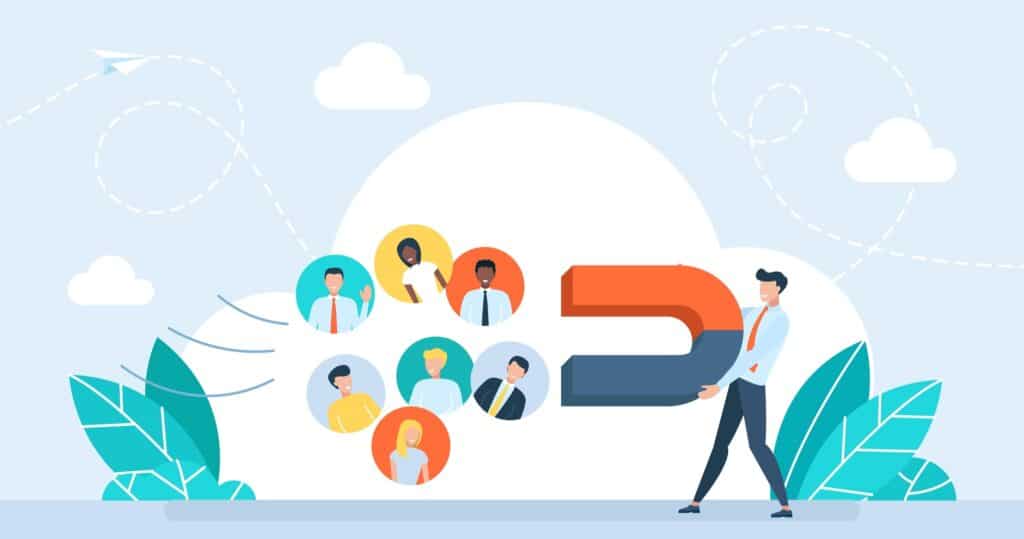
Most salespeople are busy. Few are productive. They chase. They pitch. They get ignored. And the cycle repeats.
Why? Because they’re committing one of the worst offenses in modern sales: They’re treating LinkedIn like a job board instead of a sales tool.
Your profile is not a résumé. Stop treating it like one. It’s your 24/7 sales engine—your most powerful asset online. It’s the only piece of digital real estate that is completely yours, and if it’s not designed to attract, qualify, and convert prospects, you are leaving money on the table.
A dull, forgettable, self-centered profile flat-out kills leads. It’s time to stop guessing and start leveraging the proven framework that turns a static profile into a lead-generating magnet.
Here are five non-negotiables from the new best-selling book from Jeb Blount and Brynne Tillman, The LinkedIn Edge, to make your profile stand out and start doing the heavy lifting for you.
1. Own the First Three Seconds with Your Headshot and Headline
Before anyone scrolls, they’ve already judged you. Above the scroll is where most salespeople fail immediately.. Your job is to seize control of that moment.
Your headshot matters more than any bullet point on your profile. If you’ve got a selfie, a cropped wedding photo, or an AI avatar, you might as well not have one. A professional, approachable photo with a genuine smile instantly boosts perceived competence and likability.
Your headline is not your job title. Period. “Sales Manager at XYZ Corp” puts you in the pile with everyone else. Your headline is your elevator pitch in a sentence. It needs to tell your prospect who you help, the outcome you deliver, and why they should care. Done right, your profile sparks curiosity and earns the scroll.
Action Item: Rewrite your Headline using this formula: I help [Target Audience] [Achieve Outcome] by [What You Do].
2. Design Your About Section as a Pain-to-Solution Hook
Most About sections? Total disasters that are walls of jargon and career highlights nobody cares about. Your prospects aren’t looking for someone who is qualified; they are looking for someone who understands their problem.
Your About section is your opportunity to prove you get it. It’s your hook. Use a structure that immediately names the core pain your customer is facing, shares a sharp insight that reframes their problem, positions yourself as uniquely qualified to help, and finishes with a clear action they can take.
When you speak their language and articulate their struggles, you become someone worth talking to. If your About section isn’t doing this, it’s costing you leads.
Action Item: Step into your Ideal Customer’s shoes and write the first line of your About section. It must name the biggest problem they face right now.
3. Treat the Featured Section as Your Highlight Reel
Headline earns the click. About hooks them. Featured seals the deal: ‘This is someone I need to talk to.’ It is your personal sales page and lead generation magnet baked right into your profile.
Your Featured section is where you showcase client success stories, high-performing posts, and lead magnets that prove your value. It’s visual social proof and credibility all wrapped up in a beautiful package that you control. A prospect who sees a story about how you helped a company like theirs achieve a measurable business outcome is already on the hook.
Action Item: Pin one client success story or testimonial to your Featured section that highlights a specific result and relationship.
4. Command the Conversation with the Services Section
The Services section is the most underused sales tool on LinkedIn. It instantly answers the buyer’s #1 question. When a buyer hits your profile, they are asking, “Can this person help me?” Your Services section helps them answer that question with a ‘yes’, faster.
This section, when paired with your Headline and About statement, rounds out your entire message: “I help people like you solve problems like this, and here is exactly how I do it.” Plus, the LinkedIn algorithm favors profiles with a completed Services section, instantly boosting your discoverability in searches.
Action Item: Set up your Services section right now—add a section under core sections—to articulate exactly what you do.
5. Turn Your Activity Feed into a Credibility Trail
Your activity feed is proof: you’re present, engaged, and adding value—or not. It is your thought leadership breadcrumb trail. Buyers are checking it. Before they respond to your message, they scroll straight to this section to get a glimpse of what you are all about.
The Activity Section answers the most important question on your buyer’s mind: Is this person legit? If your last post was from six months ago, or your only engagement is liking company announcements, your prospects notice. In their eyes, you’re either out of touch or not worth following. Your activity feed is a window into your thinking—and a mirror of your credibility.
Action Item: Audit your Activity Feed right now. If you don’t like what you see, start leaving thoughtful comments on 2–3 industry-relevant posts today.
Build the Machine, Not the Resume
Stop missing the mark. A dull, forgettable profile is costing you leads.
Winners aren’t lucky. They’ve mastered LinkedIn and harnessed the power of the most important networking platform in business. They understand that every element of their profile is a piece of a proven system designed to attract and convert business.
Turn your profile into a lead magnet—now.
Want the full playbook? Buy The LinkedIn Edge by Jeb Blount and Brynne Tillman. It’s packed with non-negotiables that will turn your profile into a pipeline-building machine.


![6 High-Probability Moments to Send LinkedIn Connection Requests Prior to an Event Events create natural relevance. Conferences, trade shows, user groups, and local meetups give you a reason to connect that does not feel forced. The mistake sellers make is waiting until the event starts or turning the request into a pitch. A better move is connecting days or weeks ahead with a simple acknowledgment of the shared event. Example: Hi Sarah, saw you’re attending the Midwest Manufacturing Summit next month. I’ll also be there and am super excited! I’d love to catch up in person at the event. In the meantime, let’s connect here on LinkedIn. You are aligning with something already on their calendar. When you see them at the event or reach out afterward, your name is no longer unfamiliar. Following an Event After an event, connection requests work best when they reference a real interaction, even a small one. A short conversation, a question during a session, or a brief introduction creates enough context. The request should reflect that moment, not attempt to convert it into a follow-up. Example: Tim, I enjoyed meeting you at the conference last week. Your take on [subject/trend/idea] was intriguing. I look forward to staying connected and to our next conversation. This reinforces continuity and professionalism without pushing the relationship forward prematurely. After a Sales Call Sending a connection request after a sales call is one of the most underused opportunities in prospecting. If the call was answered and productive, the request reinforces credibility and continuity. Example: Thanks again for the conversation today. I appreciated your perspective on how your team is thinking about next quarter. I look forward to our next meeting and sharing some ideas I have with you and your team. If the prospect did not answer, a connection request can still make sense as a light reinforcement, especially early in the relationship. It keeps your name present without escalating pressure. Either way, the request works because the call establishes legitimacy first. After a Meaningful Interaction Not all interactions happen in formal selling environments. Thoughtful exchanges in comment threads, group discussions, or brief conversations in passing all create natural moments to connect. That might mean running into each other at a non-work event, crossing paths at an airport, or chatting briefly in a line somewhere unexpected. Example: Haley, it was a pleasure meeting you on our flight to Atlanta. Thank you for your restaurant recommendations! I look forward to staying connected, What makes this work is that the interaction was real. The request simply continues it. Mutual Connections Shared connections reduce perceived risk when handled with restraint. They signal that you operate in similar professional circles, not that you have permission to pitch. The mistake is overexplaining or implying endorsement. Example: Hi Mark, I noticed that you are connected to my good friend, James, and since you are also [interested in, working in, located in] I thought it might make sense for us to be connected also. A simple acknowledgment is enough. Familiarity does the work. Profile Views Profile views signal awareness, not intent. When someone views your profile after a call, email, or content interaction, a connection request can make sense as a low-pressure acknowledgment. Example: Wendy, thank you for visiting my profile. I had a chance to look at yours, and based on your interests, I thought it might make sense for us to connect. The discipline is resisting the urge to read more into it than is there. Want the exact framework for integrating LinkedIn into a disciplined outreach sequence without pitching, spamming, or wasting time? Buy The LinkedIn Edge by Jeb Blount and Brynne Tillman today. Sales Gravy is the number one sales training organization](https://salesgravy.com/wp-content/uploads/2025/12/6-Moments-LinkedIn-Connection-Requests-Actually-Work-in-Prospecting-Sales-Gravy-Blog-Featured-Image-768x401.jpg)