
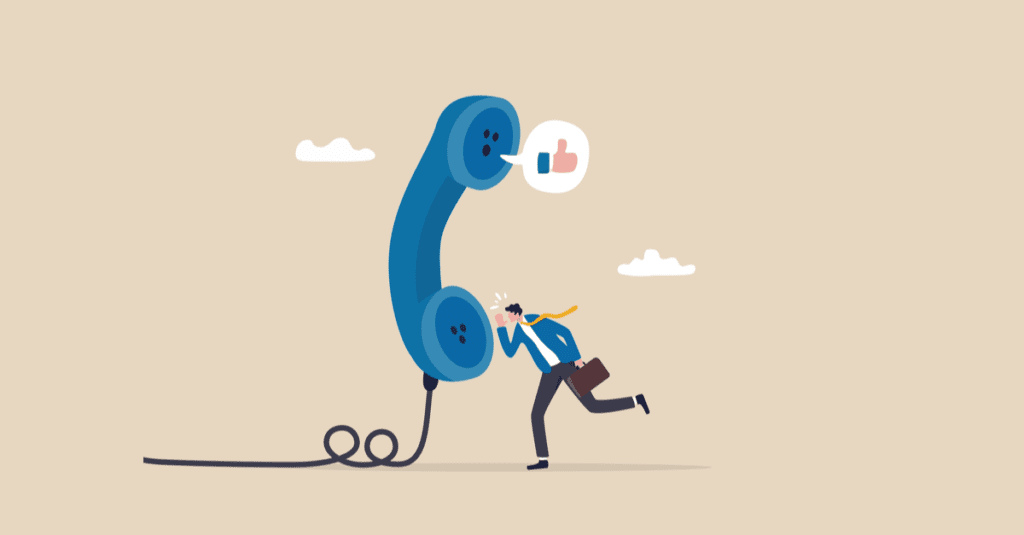
Email or Telephone: Which one do you use more for prospecting?
The question should not be the number of people you can contact. The question we need to be asking is, “What is the number of people I can close?”
“Nobody Answers The Phone”
I can’t speak to a group of salespeople, whether it be a keynote or a training session, without being asked for my views on which one I feel is better for prospecting.
The argument I hear is nobody answers the phone, and in the time it takes to make a few calls that don’t go anywhere, I can send an email to hundreds of people.
If it was just a game of the number of people you could contact in the same amount of time, then yes, email would win. I see that as a bit of a bogus question, though.
How Many People Can You Close?
The question should not be the number of people you can contact. The question we need to be asking is, “What is the number of people I can close?”
Leads that don’t go anywhere are nothing but a huge distraction and a huge de-motivator long term. Conversely, having fewer leads but being able to close a higher percent of them is a huge motivator.
Quality of Leads Versus Quantity
If your game is number of leads, use email. If it’s quality of leads, use the telephone. I’m extremely partial to the telephone for one simple reason — I know on the surface it will seem it’s taking me more time, but the conversations with the people I reach are more likely to turn into meaningful conversations.
When people prospect with email, the tendency is to send too much information. The reason for this is that people believe they may have only one chance to reach a prospect, so they need to provide them with as much information as possible.
This approach can ironically do more damage to the sales process. If the person reads all the information, they may be able to make a decision without ever talking to the salesperson.
Uncover A Need By Creating A Relationship
Prospecting is about uncovering a need by creating a relationship. If this is the objective, then it’s going to require a conversation to do it— and that means using the telephone.
I’m not against using email to prospect. I’m just against using it as the primary — or worse, only — prospecting method. Give me the telephone as my primary prospecting tool anytime, and I will use email as my backup or secondary tool.
When I share this philosophy with salespeople, there are those who buy my argument and those who don’t.
30-Day Telephone Prospecting Challenge
When I meet a person who doesn’t agree with me, I challenge them to use the telephone as their primary tool for 30 days and compare the results to the preceding 30 days and let me know the results.
In my sales training and consulting experience, people are blown away by the results they achieve.
I’ll challenge you to the same test. For the next 30 days, use the telephone as your primary way to prospect and then reflect on the results. What made the bigger impact to your bottom line?
I firmly believe sales is business and prospecting is sales, so if we want to be serious about the business we create, then we need to step up and prospect in the best way possible.
This free guide on prospecting sequences will teach you how to develop a series of prospecting touches, arranged in an intentional sequence, to improve the probability that you engage your prospect. Download the FREE Seven Steps to Building Effective Prospecting Sequences ebook here.

![6 High-Probability Moments to Send LinkedIn Connection Requests Prior to an Event Events create natural relevance. Conferences, trade shows, user groups, and local meetups give you a reason to connect that does not feel forced. The mistake sellers make is waiting until the event starts or turning the request into a pitch. A better move is connecting days or weeks ahead with a simple acknowledgment of the shared event. Example: Hi Sarah, saw you’re attending the Midwest Manufacturing Summit next month. I’ll also be there and am super excited! I’d love to catch up in person at the event. In the meantime, let’s connect here on LinkedIn. You are aligning with something already on their calendar. When you see them at the event or reach out afterward, your name is no longer unfamiliar. Following an Event After an event, connection requests work best when they reference a real interaction, even a small one. A short conversation, a question during a session, or a brief introduction creates enough context. The request should reflect that moment, not attempt to convert it into a follow-up. Example: Tim, I enjoyed meeting you at the conference last week. Your take on [subject/trend/idea] was intriguing. I look forward to staying connected and to our next conversation. This reinforces continuity and professionalism without pushing the relationship forward prematurely. After a Sales Call Sending a connection request after a sales call is one of the most underused opportunities in prospecting. If the call was answered and productive, the request reinforces credibility and continuity. Example: Thanks again for the conversation today. I appreciated your perspective on how your team is thinking about next quarter. I look forward to our next meeting and sharing some ideas I have with you and your team. If the prospect did not answer, a connection request can still make sense as a light reinforcement, especially early in the relationship. It keeps your name present without escalating pressure. Either way, the request works because the call establishes legitimacy first. After a Meaningful Interaction Not all interactions happen in formal selling environments. Thoughtful exchanges in comment threads, group discussions, or brief conversations in passing all create natural moments to connect. That might mean running into each other at a non-work event, crossing paths at an airport, or chatting briefly in a line somewhere unexpected. Example: Haley, it was a pleasure meeting you on our flight to Atlanta. Thank you for your restaurant recommendations! I look forward to staying connected, What makes this work is that the interaction was real. The request simply continues it. Mutual Connections Shared connections reduce perceived risk when handled with restraint. They signal that you operate in similar professional circles, not that you have permission to pitch. The mistake is overexplaining or implying endorsement. Example: Hi Mark, I noticed that you are connected to my good friend, James, and since you are also [interested in, working in, located in] I thought it might make sense for us to be connected also. A simple acknowledgment is enough. Familiarity does the work. Profile Views Profile views signal awareness, not intent. When someone views your profile after a call, email, or content interaction, a connection request can make sense as a low-pressure acknowledgment. Example: Wendy, thank you for visiting my profile. I had a chance to look at yours, and based on your interests, I thought it might make sense for us to connect. The discipline is resisting the urge to read more into it than is there. Want the exact framework for integrating LinkedIn into a disciplined outreach sequence without pitching, spamming, or wasting time? Buy The LinkedIn Edge by Jeb Blount and Brynne Tillman today. Sales Gravy is the number one sales training organization](https://salesgravy.com/wp-content/uploads/2025/12/6-Moments-LinkedIn-Connection-Requests-Actually-Work-in-Prospecting-Sales-Gravy-Blog-Featured-Image-768x401.jpg)